Skip to content
  • Blog
  • Categories
  • Recent
  • Tags
  • Popular
  • Users
  • Groups
Skins
  • Light
  • Brite
  • Cerulean
  • Cosmo
  • Flatly
  • Journal
  • Litera
  • Lumen
  • Lux
  • Materia
  • Minty
  • Morph
  • Pulse
  • Sandstone
  • Simplex
  • Sketchy
  • Spacelab
  • United
  • Yeti
  • Zephyr
  • Dark
  • Cyborg
  • Darkly
  • Quartz
  • Slate
  • Solar
  • Superhero
  • Vapor

  • Default (No Skin)
  • No Skin
Collapse
Brand Logo

Community Forum

  1. Home
  2. Categories
  3. Blog articles comments
  4. New Adafruit generic OLED display driver for Raspberry PI

New Adafruit generic OLED display driver for Raspberry PI

Scheduled Pinned Locked Moved Blog articles comments
driver1.30.96i2ciic
53 Posts 20 Posters 52.7k Views 2 Watching
  • Oldest to Newest
  • Newest to Oldest
  • Most Votes
Reply
  • Reply as topic
Log in to reply
This topic has been deleted. Only users with topic management privileges can see it.
  • CharlesC Offline
    CharlesC Offline
    Charles
    wrote on last edited by Charles
    #1

    After some years of using my SSD1306 library driver on Raspberry Pi, I needed to get it working with the new more and more popular 1.3″ I2C OLED driver that we can find for some bucks on Chinese ebay sellers.… Continue Reading

    Click here to see the full blog post

    1 Reply Last reply
    • M Offline
      M Offline
      Mr_Tom
      wrote on last edited by
      #2

      I'm trying to get your library to function. I've already created Python programs for the Adafruit SSD1306 in SPI mode by using the Adafruit python librarys. Now I'm trying to program the display in C++.

      But your wiring diagram differs from Adafruit's. What you're calling the RPi pinouts is actually different. Like the RST, DATA, CLK. If I forget the RPi pinout and just follow the name of the function, the only two things I had to change was DC from RPi 16 to 18, and RST from 18 to 22. Then all the named pins matched to Adafruit's pinout. But I don't get any output on my OLED.

      What am I doing wrong?

      1 Reply Last reply
      • M Offline
        M Offline
        Mr_Tom
        wrote on last edited by
        #3

        I meant I ignored your OLED pinout. Pins 1-8 on the OLED.

        Example; OLED pin 4, my OLED has CS written on it, but you're calling it DATA.
        My OLED pin 8 has DATA written next to it. You're calling it CS.

        Adafruit says DATA should go to RPi pin 19, which is what you say DATA should go to. But you're calling DATA on the OLED as pin 4.

        What is the REAL/CORRECT wiring for the RPi2?

        1 Reply Last reply
        • M Offline
          M Offline
          Mr_Tom
          wrote on last edited by
          #4

          https://learn.adafruit.com/ssd1306-oled-displays-with-raspberry-pi-and-beaglebone-black/wiring

          1 Reply Last reply
          • CharlesC Offline
            CharlesC Offline
            Charles
            wrote on last edited by Charles
            #5

            Tom,

            The link you provided (ie this one https://learn.adafruit.com/ssd1306-oled-displays-with-raspberry-pi-and-beaglebone-black/wiring) refers to pin name printed on PCB, mine the pin that I call Pi P1 Header Pin is the pin number of the connector P1, not the number printed on the PCB (which is the GPIO name) take a look on the connector
            As You see Adafruit and mine are most of time the same (I refer to the P1 connector pin numbers in the circle in the previous image link).

            The only change For SPI, is that Adafruit connected RST to GPIO24 (P1 pin 18) and DC to GPIO23 (P1 pin 16) and mine is RST to GPIO25 (P1 pin 22) and DC to GPIO24 (P1 pin 18) so you just need to change these 2 ones in your wiring

            • RST to GPIO25 (P1 pin 22)
            • D/C GPIO24 (P1 pin 18)

            And this should be working fine

            PS : you can also keep Adafruit connection and change these 2 lines in the code

            #define OLED_SPI_RESET RPI_V2_GPIO_P1_22 /* GPIO 25 pin 22  */
            #define OLED_SPI_DC    RPI_V2_GPIO_P1_18 /* GPIO 24 pin 18  */
            

            by

            #define OLED_SPI_RESET RPI_V2_GPIO_P1_18 /* GPIO 24 pin 18  */
            #define OLED_SPI_DC    RPI_V2_GPIO_P1_16 /* GPIO 23 pin 16  */
            

            in the file ArduiPi_SSD1306.h

            Charles

            1 Reply Last reply
            • M Offline
              M Offline
              Mr_Tom
              wrote on last edited by
              #6

              Ok. I changed the Raspberry Pi wiring back to Adafruit. I can run Adafruit's Python examples okay. I changed those 2 lines in 'ArduiPi_OLED_lib.h'. I 'sudo make' the library files, and 'sudo make' the example. When I run 'sudo ./oled_demo -o 1' nothing happens.

              I put some 'printf' commands in the example for debugging, and it seems to lock up after it calls 'display.begin()'.

              I can't find where the function display.begin() is so I can diagnose/debug it further.

              1 Reply Last reply
              • M Offline
                M Offline
                Mr_Tom
                wrote on last edited by
                #7

                I downloaded the older ArduiPi_SSD1306 and tried that, but same thing. Freezes after it runs 'display.begin()'. I changed the RESET and DC in the .h file as you mentioned. I don't understand why I can't access the display in C++, but Python works perfectly. I'm using a Raspberry Pi 2 if that makes a difference, and an SSD1306 1.3" 128x64 purchased from Adafruit.

                1 Reply Last reply
                • M Offline
                  M Offline
                  Mr_Tom
                  wrote on last edited by
                  #8

                  Update: I setup my OLED in I2C mode and changed the address to 3D, and it worked. But I would still rather use SPI mode.

                  1 Reply Last reply
                  • CharlesC Offline
                    CharlesC Offline
                    Charles
                    wrote on last edited by
                    #9

                    That's an interesting point, I did not tried on a PI V2, I have one at home, I need to test just in case, because the driver relies on old BCM2835 library that may be I need to update for PI V2, worth checking.

                    Good to know it works with I2C but I understand you prefer SPI, for sure it's so much faster.

                    1 Reply Last reply
                    • M Offline
                      M Offline
                      Mr_Tom
                      wrote on last edited by
                      #10

                      Hi, Charles. Any progress with testing the library on a PI v2? Is the BCM2836 extremely different than the BCM2835?

                      1 Reply Last reply
                      • Meng QiM Offline
                        Meng QiM Offline
                        Meng Qi
                        wrote on last edited by Meng Qi
                        #11

                        Thank you for the detailed blog post. I followed your instructions and got 2 problems :

                        1. there is no libi2c available, the only thing similar I've found is libi2c-dev so I installed that;
                        2. I got error messages while trying to "sudo make" within the example folder, here is a photo showing the result.
                          http://i.imgur.com/MkWvXbC.jpg

                        Btw I am on a Pi B V2. One strange thing is that when I ran "sudo i2cdetect -y 1" there is nothing on the table. But while I tried to use Adafruit_SSD1306 library, the oled would respond (weirdly).

                        Thanks

                        1 Reply Last reply
                        • CharlesC Offline
                          CharlesC Offline
                          Charles
                          wrote on last edited by
                          #12

                          @Meng-Qi

                          the i2c smbus_ is a know problem

                          you just need to intall again lm-sensors package (even if correctly installed) then all shoud go fine. Something obvious I’d like to understand, but it seems to work.

                          look below how I resolved it.

                          root@pi03:~/github/ArduiPi_SSD1306/examples# make
                          g++ -Ofast -mfpu=vfp -mfloat-abi=hard -march=armv6zk -mtune=arm1176jzf-s -Wall  -lssd1306 ssd1306_demo.cpp -o ssd1306_demo
                          /usr/local/lib/libssd1306.so: undefined reference to `i2c_smbus_write_i2c_block_data'
                          /usr/local/lib/libssd1306.so: undefined reference to `i2c_smbus_write_byte_data'
                          /usr/local/lib/libssd1306.so: undefined reference to `i2c_smbus_write_word_data'
                          collect2: ld returned 1 exit status
                          make: *** [ssd1306_demo] Error 1
                          root@pi03:~/github/ArduiPi_SSD1306/examples# dpkg --get-selections | grep i2c
                          i2c-tools                                       install
                          libi2c-dev                                      install
                          root@pi03:~/github/ArduiPi_SSD1306/examples#  dpkg --get-selections | grep lm
                          lm-sensors                                      install
                          root@pi03:~/github/ArduiPi_SSD1306/examples# apt-get install lm-sensors
                          Reading package lists... Done
                          Building dependency tree
                          Reading state information... Done
                          lm-sensors is already the newest version.
                          The following packages were automatically installed and are no longer required:
                            libblas3gf liblapack3gf
                          Use 'apt-get autoremove' to remove them.
                          0 upgraded, 0 newly installed, 0 to remove and 14 not upgraded.
                          root@pi03:~/github/ArduiPi_SSD1306/examples# make clean
                          rm -rf ssd1306_demo teleinfo-oled
                          root@pi03:~/github/ArduiPi_SSD1306/examples# cd ..
                          root@pi03:~/github/ArduiPi_SSD1306# make clean
                          rm -rf *.o libssd1306.* /usr/local/lib/libssd1306.*
                          root@pi03:~/github/ArduiPi_SSD1306# make
                          g++ -Wall -fPIC -fno-rtti -Ofast -mfpu=vfp -mfloat-abi=hard -march=armv6zk -mtune=arm1176jzf-s -c Adafruit_SSD1306.cpp
                          ./ArduiPi_SSD1306.h:51:21: warning: ‘oled_type_str’ defined but not used [-Wunused-variable]
                          g++ -Wall -fPIC -fno-rtti -Ofast -mfpu=vfp -mfloat-abi=hard -march=armv6zk -mtune=arm1176jzf-s -c Adafruit_GFX.cpp
                          ./ArduiPi_SSD1306.h:51:21: warning: ‘oled_type_str’ defined but not used [-Wunused-variable]
                          gcc -Wall -fPIC -Ofast -mfpu=vfp -mfloat-abi=hard -march=armv6zk -mtune=arm1176jzf-s -c bcm2835.c
                          g++ -shared -Wl,-soname,libssd1306.so.1 -Ofast -mfpu=vfp -mfloat-abi=hard -march=armv6zk -mtune=arm1176jzf-s  -o libssd1306.so.1.0 Adafruit_SSD1306.o Adafruit_GFX.o bcm2835.o
                          [Install Library]
                          [Install Headers]
                          root@pi03:~/github/ArduiPi_SSD1306# cd examples/
                          root@pi03:~/github/ArduiPi_SSD1306/examples# make
                          g++ -Ofast -mfpu=vfp -mfloat-abi=hard -march=armv6zk -mtune=arm1176jzf-s -Wall  -lssd1306 ssd1306_demo.cpp -o ssd1306_demo
                          g++ -Ofast -mfpu=vfp -mfloat-abi=hard -march=armv6zk -mtune=arm1176jzf-s -Wall  -lssd1306 teleinfo-oled.cpp -o teleinfo-oled
                          root@pi03:~/github/ArduiPi_SSD1306/examples#


                          For the i2cbus detection, nothing to do with my lib, i2cdetect is a tool distribued with your linux distro.

                          So to be sure I've just gone on my PI V2 to test

                          root@pi01(rw):~/ArduiPi_OLED/examples# i2cdetect -y 1
                               0  1  2  3  4  5  6  7  8  9  a  b  c  d  e  f
                          00:          -- -- -- -- -- -- -- -- -- -- -- -- --
                          10: -- -- -- -- -- -- -- -- -- -- -- -- -- -- -- --
                          20: -- -- -- -- -- -- -- -- -- -- -- -- -- -- -- --
                          30: -- -- -- -- -- -- -- -- -- -- -- -- 3c -- -- --
                          40: -- -- -- -- -- -- -- -- -- -- -- -- -- -- -- --
                          50: -- -- -- -- -- -- -- -- -- -- -- -- -- -- -- --
                          60: -- -- -- -- -- -- -- -- -- -- -- -- -- -- -- --
                          70: -- -- -- -- -- -- -- --
                          
                          root@pi01(rw):~/ArduiPi_OLED/examples# ./oled_demo -o 3
                          x: 9y: 0dy: 3
                          x: 30y: 0dy: 2
                          x: 111y: 0dy: 2
                          x: 81y: 0dy: 4
                          x: 41y: 0dy: 2
                          x: 85y: 0dy: 5


                          So @Mr_Tom yes it works on Pi V2 (at least in I2C mode) but should be the same for SPI; look below
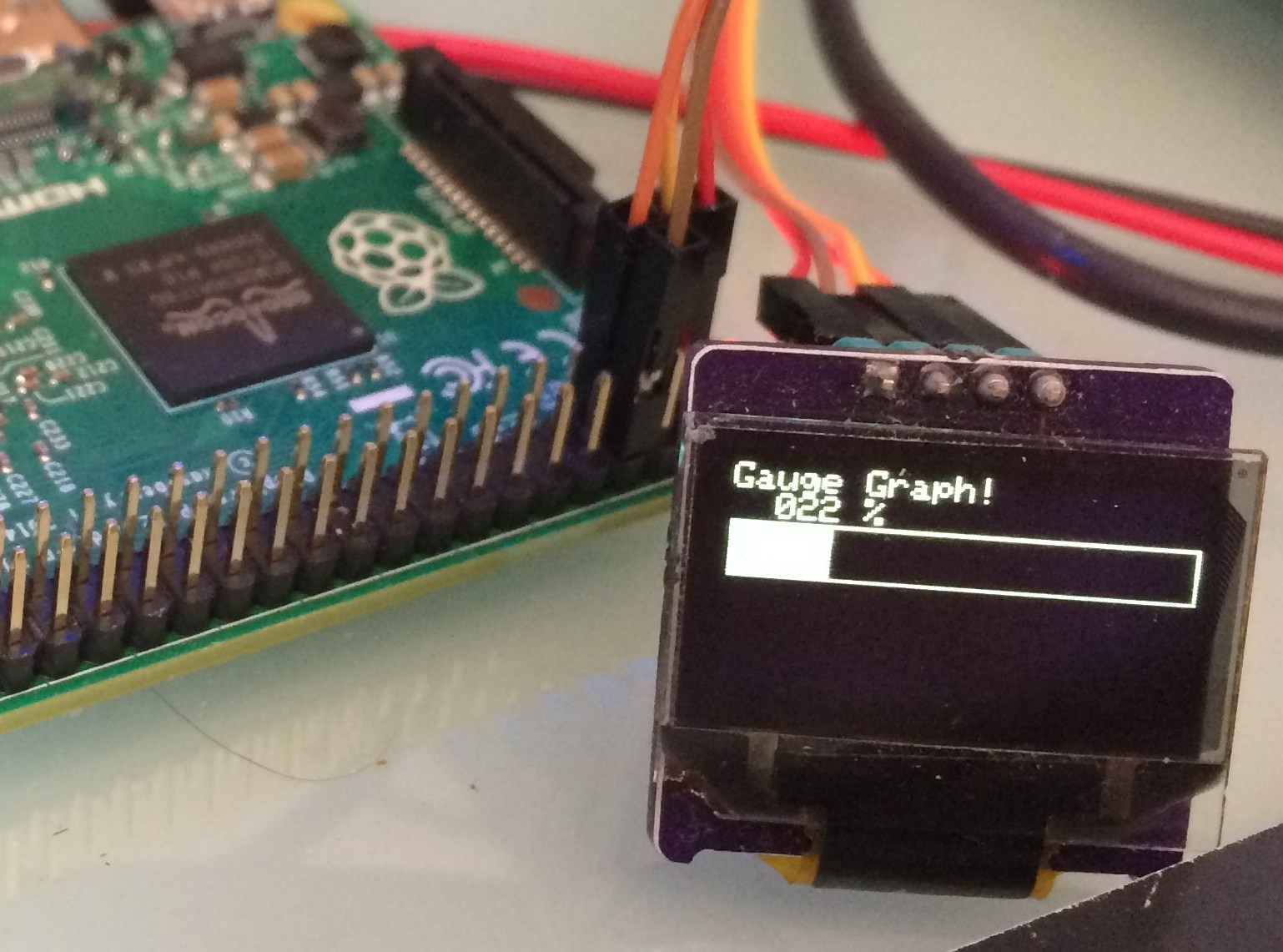
                          V2-OLED.jpg

                          1 Reply Last reply
                          • Meng QiM Offline
                            Meng QiM Offline
                            Meng Qi
                            wrote on last edited by
                            #13

                            I've got the lm-sensors module in there, and the make on examples worked.

                            But only still I can't get my Pi to recognize my oled screen, and I have another device on the i2c bus which works perfectly.
                            I just ordered another oled (a seeed 96*96) to see if that would work.

                            Thank you for your detailed reply!

                            1 Reply Last reply
                            • CharlesC Offline
                              CharlesC Offline
                              Charles
                              wrote on last edited by
                              #14

                              Meng,

                              Even if Seeed OLED will be seen, it won't work because it"s another driver in it (SSD1308) and I didn't port this one in the example code, something I wanted to do but never had time do do it.

                              By the way Seeed OLED 96x96 is the best OLED I ever saw, excellent display and gray level.

                              1 Reply Last reply
                              • CharlesC Offline
                                CharlesC Offline
                                Charles
                                wrote on last edited by
                                #15

                                Meng
                                did you tried your non working OLED on an Arduino with I2CScan sketch just to see ?

                                1 Reply Last reply
                                • Meng QiM Offline
                                  Meng QiM Offline
                                  Meng Qi
                                  wrote on last edited by
                                  #16

                                  Hi, Charles,

                                  I've tested my oled with I2CScan, and it wasn't detected... maybe a broken one. And I have another oled screen here which can be detected on Arduino, but not on Pi.

                                  Here is a library by Seeed themselves : https://github.com/DexterInd/GrovePi/tree/master/Software/Python/grove_oled
                                  I'll see if that would work once the oled screen arrives. Happy to know that it looks amazing.

                                  1 Reply Last reply
                                  • CharlesC Offline
                                    CharlesC Offline
                                    Charles
                                    wrote on last edited by
                                    #17

                                    Meng,
                                    yeah Seeed library works fine on Arduino, but not sure there is a port on Raspberry Pi

                                    1 Reply Last reply
                                    • Meng QiM Offline
                                      Meng QiM Offline
                                      Meng Qi
                                      wrote on last edited by Meng Qi
                                      #18

                                      This 96*96 oled screen is detected by my Pi and it is working with Seeed's own library, and it would also put out stuff while running your oled_demo.

                                      Does your library has a manual? It doesn't looks like python when I peek into your library files... Sorry I am quite a beginner. Thank you.

                                      I use my Pi to generate sound, and if I do oled operations within the same piece of .py file that does sound, any oled writing operations would block the sound. But if I open 2 terminal instances (I am using SSH), and run sound code on one, oled code on another, it wouldn't block the sound. So it is certainly not a CPU speed issue...

                                      Why does this happen? And if I make my Pi running some python code at boot, how I can make the codes running like within multiple terminals?

                                      Thank you!

                                      1 Reply Last reply
                                      • G Offline
                                        G Offline
                                        gbona
                                        wrote on last edited by
                                        #19

                                        I also try to run it on RPi2 with an SPI OLED 128x64 and ran into the same problem. The program freezes in display.begin(). What can be wrong?

                                        1 Reply Last reply
                                        • CharlesC Offline
                                          CharlesC Offline
                                          Charles
                                          wrote on last edited by
                                          #20

                                          Hi gbona,
                                          Did you checked that your I2C oled is visible with i2cdetect ? If so does his I2C address is 0x3C ?

                                          1 Reply Last reply

                                          Hello! It looks like you're interested in this conversation, but you don't have an account yet.

                                          Getting fed up of having to scroll through the same posts each visit? When you register for an account, you'll always come back to exactly where you were before, and choose to be notified of new replies (either via email, or push notification). You'll also be able to save bookmarks and upvote posts to show your appreciation to other community members.

                                          With your input, this post could be even better 💗

                                          Register Login
                                          Reply
                                          • Reply as topic
                                          Log in to reply
                                          • Oldest to Newest
                                          • Newest to Oldest
                                          • Most Votes


                                          0

                                          Online

                                          5.8k

                                          Users

                                          565

                                          Topics

                                          5.3k

                                          Posts

                                          Top Topics

                                          Popular Tags

                                          teleinfo
                                          25 topics
                                          arduino
                                          19 topics
                                          remora
                                          16 topics
                                          esp8266
                                          10 topics
                                          arduipi
                                          10 topics
                                          raspberry
                                          8 topics
                                          wifinfo
                                          7 topics
                                          broadcast
                                          7 topics
                                          Copyright © 2022 Charles-Henri Hallard | Return to blog page | Powered by NodeBB
                                          • Login

                                          • Don't have an account? Register

                                          • Login or register to search.
                                          • First post
                                            Last post
                                          0
                                          • Blog
                                          • Categories
                                          • Recent
                                          • Tags
                                          • Popular
                                          • Users
                                          • Groups